
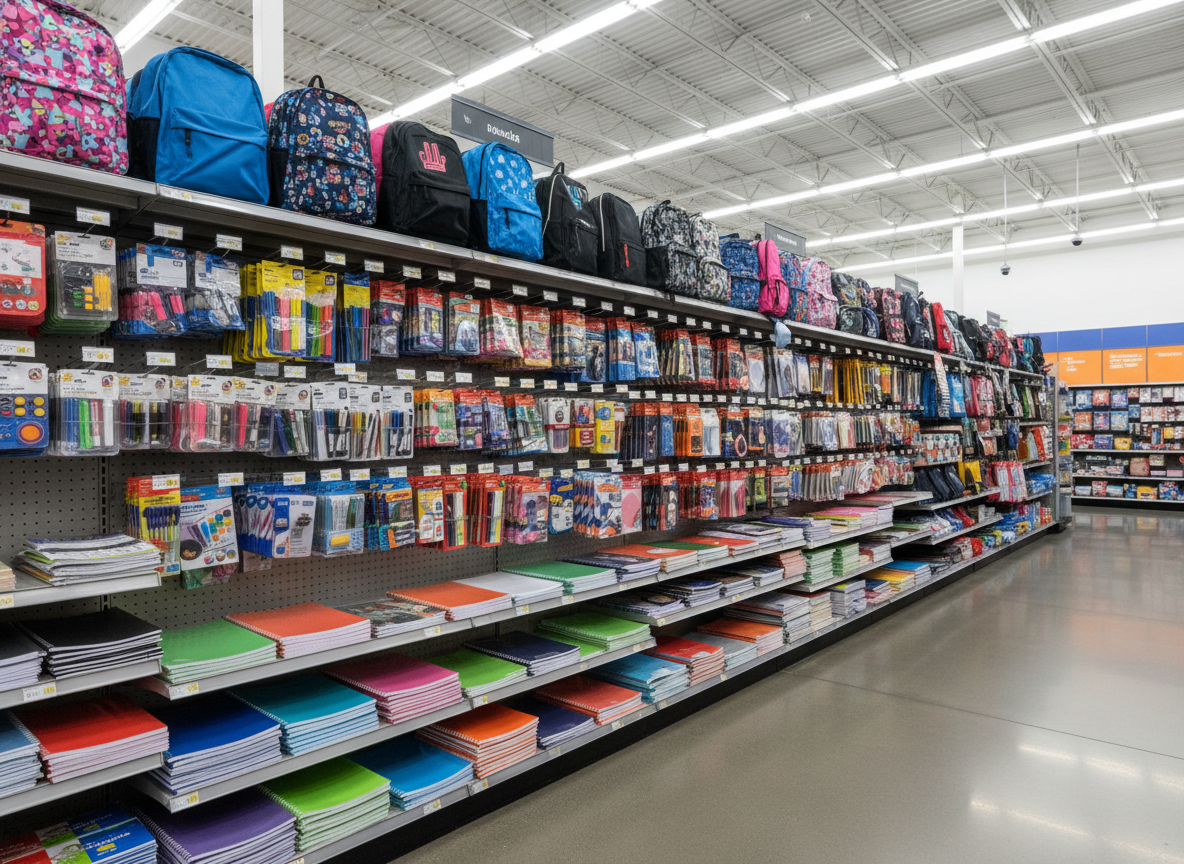
Every August, the same scene plays out in stores across the country: a parent standing in the school supply aisle, list in hand, doing quiet math while a kid tugs at a backpack three aisles over. That scene hasn’t changed much. What has changed is how families are getting through it.
A few years ago, back-to-school shopping was mostly a one-trip errand — pick a weekend, hit one big store, done. Now it looks more like a spread-out campaign. Families are splitting the list across multiple stores, buying basics like notebooks and folders wherever they’re cheapest that week, and saving name-brand spending for the handful of items — a specific backpack, a particular calculator — where the kid actually cares which one they get.
Secondhand Isn’t a Last Resort Anymore
Backpacks and lightly-used graphing calculators showing up in resale apps and local buy-sell groups used to feel like a budget compromise. Increasingly, it’s just the first place people look. A calculator that costs real money new but gets used for one semester and forgotten is exactly the kind of item families have stopped feeling obligated to buy brand new.
The List Gets Negotiated, Not Just Followed
Teachers send home supply lists that can run surprisingly long, and more parents are treating those lists as a starting point rather than a strict order. Some items get shared between siblings. Some get carried over from last year if they’re barely used. It’s a small shift, but it adds up — especially in households sending more than one kid back to school at the same time.
None of this is dramatic. Nobody’s skipping the school supply run entirely. It’s just gotten a little smarter, a little more spread out, and a little less automatic than it used to be — which, for a lot of family budgets, has made a real difference by the time September actually arrives.
Leave a Reply