
There’s a specific kind of guilt that comes from tapping your card for a $6 latte at 7:45 a.m. You know exactly what it costs. You do the math in your head anyway — thirty bucks a week, more than a hundred a month — and you order it anyway, because mornings are hard and that first sip in the car feels like the only part of the day that’s entirely yours.
Lately, though, a lot of people seem to be breaking up with that routine. Not dramatically. Not with some big New Year’s resolution that fizzles out by February. Quietly. One skipped drive-thru at a time.
Walk into any office kitchen right now and you’ll probably spot it: the desk drawer with a bag of good beans in it, the little single-serve dripper someone brought from home, the coworker who used to be first in line at the coffee shop and now just isn’t there anymore. It’s not that people stopped loving coffee. If anything, some of them care more about it than ever. They just stopped paying someone else five dollars a cup to make it for them.
It’s Not Really About the Coffee
Ask around and the coffee itself is almost beside the point. What people bring up is everything else — the grocery bill that keeps creeping up, the rent renewal notice, the fact that so many small conveniences seem to cost more than they used to. The daily coffee run just happens to be one of the few expenses that’s easy to see, easy to track, and easy to cut without actually giving anything important up.
That’s the part that makes it different from most budgeting advice. Nobody wants to hear “stop going out to dinner” or “cancel your gym membership.” But making coffee at home? That barely registers as a sacrifice. You still get the coffee. You still get the ritual. You just get it in your own kitchen instead of a drive-thru line.
The New Morning Ritual Looks a Little Different
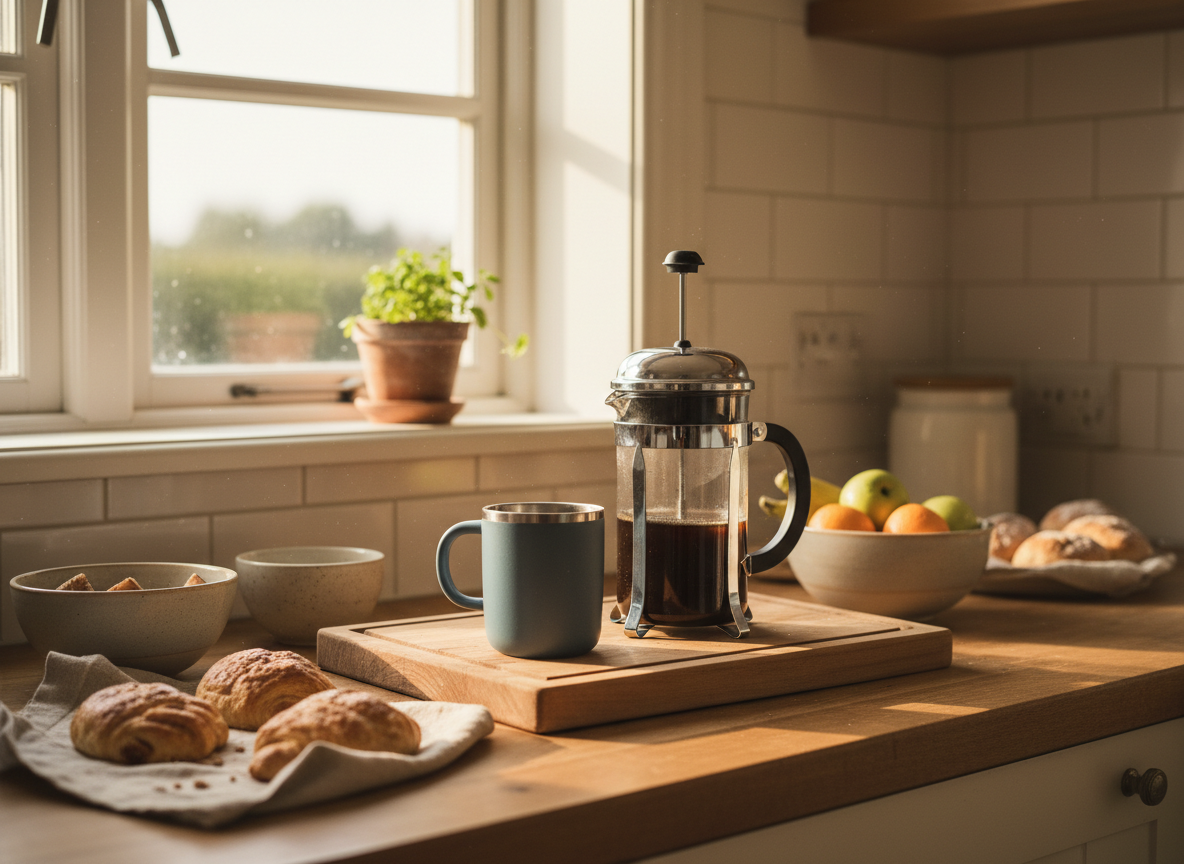
What’s interesting is how much effort people are putting into replacing something they used to grab in thirty seconds. Home espresso machines are showing up in more kitchens. So are pour-over setups, milk frothers, and flavored syrups bought in bulk instead of by the pump. People aren’t just settling for drip coffee in a chipped mug — they’re rebuilding the coffee shop experience at home, syrup and all, because the ritual part of it still matters. It’s the price tag that stopped making sense.
There’s also a travel mug renaissance happening, if that’s not too dramatic a way to put it. The insulated tumbler that keeps coffee hot for six hours has become something people genuinely get attached to — carrying it from the kitchen to the car to the desk, refilling it instead of buying a new cup every single day.
What It Actually Adds Up To
Do the simple math and it’s not hard to see why the habit sticks once people start it. A daily coffee shop habit easily runs well over a hundred dollars a month for a lot of people. A bag of decent beans and a basic home setup can cover the same number of cups for a fraction of that. It’s the kind of savings that doesn’t feel like a sacrifice, which might be exactly why it’s spreading — one habit at a time, one skipped drive-thru at a time, without anyone announcing it as a big financial decision at all.
Maybe that’s the real shift. Not a movement, not a trend with a hashtag — just a lot of individual mornings where someone reached for their own kettle instead of their car keys, and realized the coffee tasted just fine either way.
Leave a Reply