
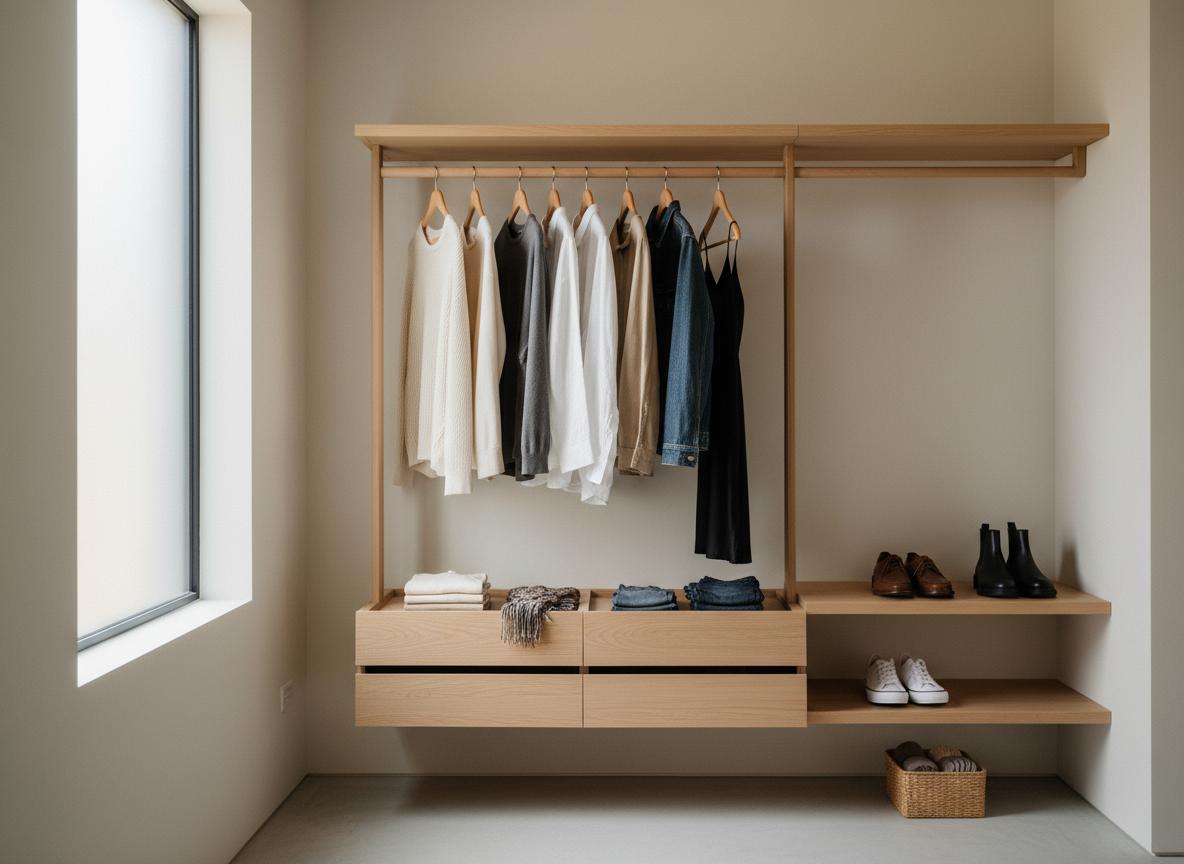
Somewhere between a packed closet nobody can find anything in and a genuine minimalist lifestyle sits a specific, oddly popular compromise: pick roughly thirty items — tops, bottoms, shoes, the works — and wear only that rotation for a season.
It sounds restrictive on paper. In practice, most people who try it say the opposite happens — getting dressed gets faster, not harder, once every piece in the rotation actually goes with everything else.
It Exposes How Little of a Closet Actually Gets Worn
Most people, once they actually count, realize they cycle through a small fraction of their closet regularly while the rest sits untouched for months. The challenge just makes that math explicit and forces a decision about the pieces that never see daylight.
It Changes Shopping Habits After the Season Ends
People who go through the exercise once often report shopping differently afterward — fewer impulse buys, more thought about whether a new piece actually pairs with what they already own. The habit tends to outlast the actual challenge period.
It’s not really about owning less for its own sake. For a lot of people, it’s closer to discovering that a smaller, more deliberate wardrobe was quietly more useful than the overflowing one they’d been managing around for years.
Leave a Reply