
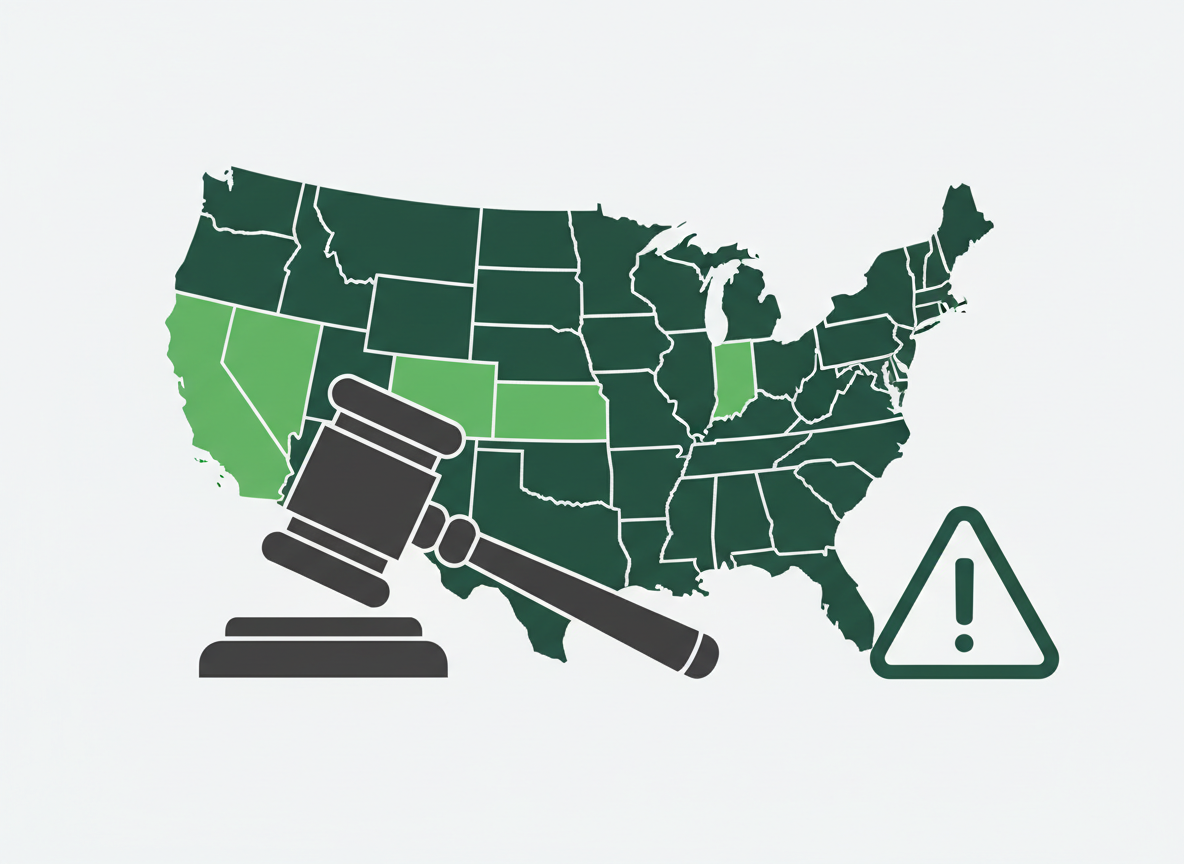
Kratom, a supplement derived from a Southeast Asian tree leaf and long sold at gas stations and convenience stores as a natural remedy for pain and anxiety, is facing a wave of state bans as regulators grow concerned about overdoses and a more potent, concentrated derivative called 7-OH.
What’s driving the crackdown
Reports to U.S. poison-control centers involving kratom have climbed roughly 12-fold over the past decade, and the CDC has linked kratom to more than 5,200 fatal overdoses between 2020 and 2024. Much of the recent alarm centers on 7-hydroxymitragynine, or 7-OH, a concentrated derivative that entered the market in 2023 and produces stronger, opioid-like effects than plain-leaf kratom.
Where it’s banned
Alabama, Arkansas, Connecticut, Indiana, Kansas, Louisiana, Vermont, and Wisconsin currently schedule kratom as a controlled substance with criminal penalties for possession or sale. Tennessee’s ban takes a similar approach under a 2026 law. North Dakota’s governor declared a public health emergency in August 2026 and banned all kratom products by executive order, and Massachusetts issued a temporary emergency order doing the same. Several other states, including Florida, Louisiana, Mississippi, and Colorado, have specifically targeted 7-OH rather than banning natural kratom leaf outright.
Where it’s regulated instead of banned
Roughly two dozen states have taken a lighter-touch approach, setting a minimum purchase age of 18 or 21 rather than banning the product. Idaho and Rhode Island are both moving toward formal regulatory frameworks similar to how some states handle cannabis. At the federal level, the FDA recommended scheduling 7-OH under the Controlled Substances Act, and a temporary scheduling order took effect in August 2026 — but it applies only to concentrated 7-OH products, not to kratom leaf itself.
Because state rules are changing quickly and vary widely, anyone using kratom for pain relief or to manage opioid withdrawal should check current local law and, ideally, talk with a doctor about safer, regulated alternatives rather than relying on an unregulated supplement.
Leave a Reply